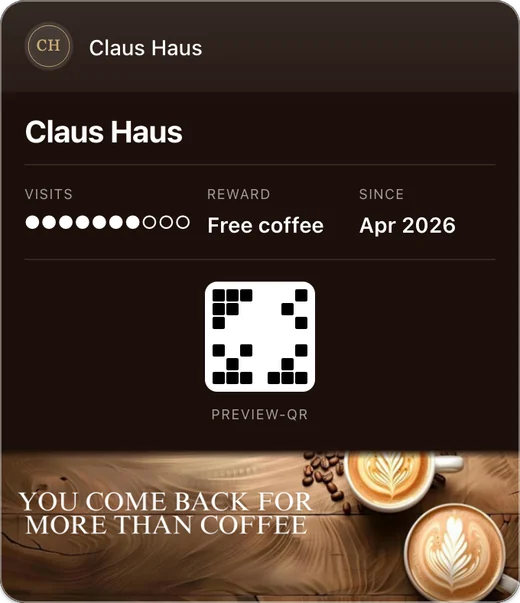
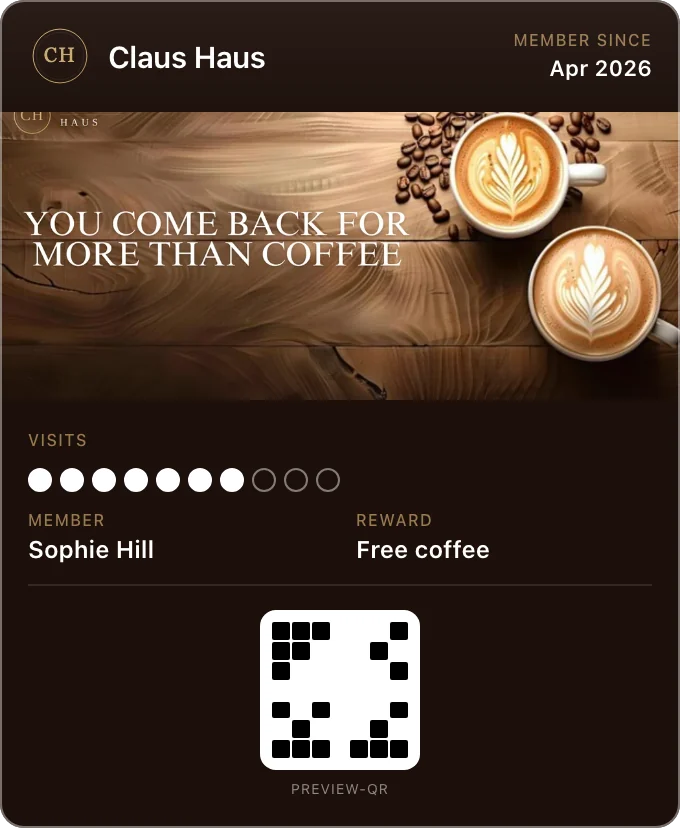
Fideliya gives you a page for every customer, so you know each one by name and what will bring them back. It shows where they stand, such as new, regular, due back or reward ready, and their next step, beside their visits, their last visit, their progress to the reward and your staff’s private notes. That record belongs to your business, and Pro exports it as CSV.
Know every customer by name: their visits, how close they are to a reward, their next step and your staff’s notes. The data is yours; Pro exports CSV.
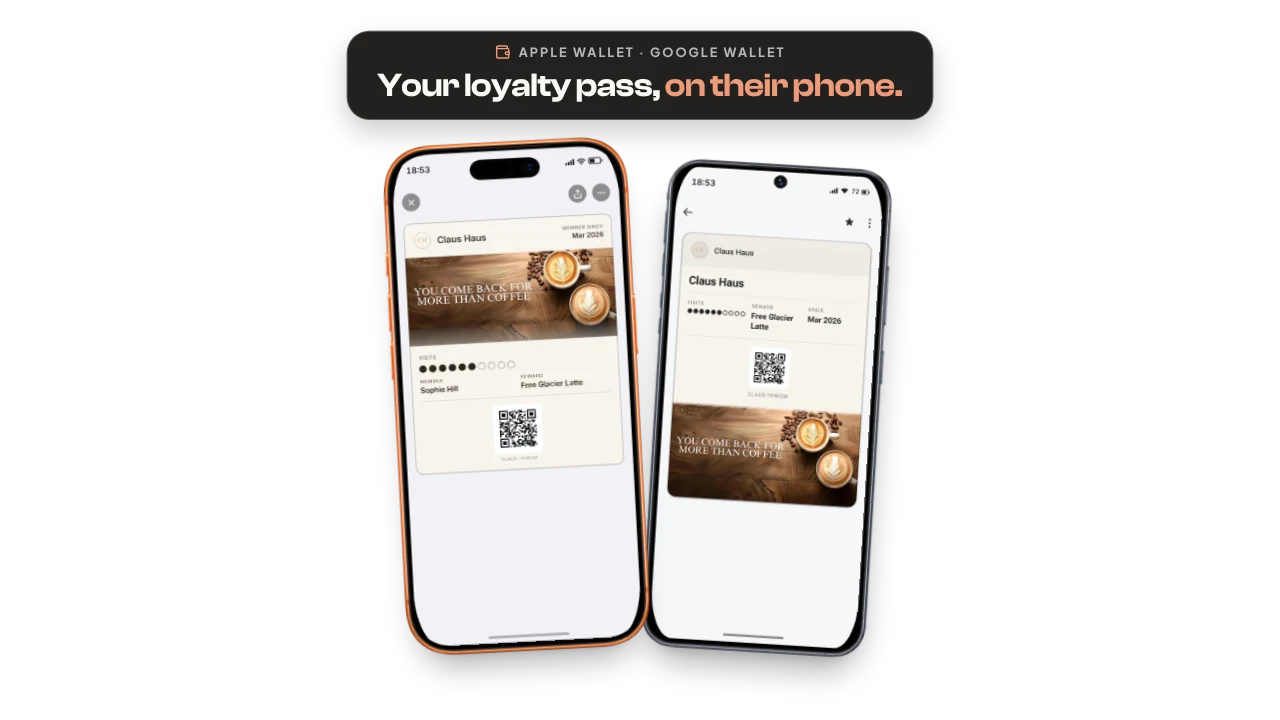
Every customer, by name, with their next step
Know who walked in, by name
Customers join with a name and an email, both required, so no one in your list is anonymous. Phone is optional.
Where each customer stands, and what to do next
Each customer’s page says where they stand and their next step: a reward to give, a message to send, or the visits left to the reward.
Catch them near a reward, or before they drift
One filter shows who is four fifths of the way to the goal, or one visit from it. Another, Inactive, shows everyone not in for 30 days or more: the Overview’s due back.
Your team remembers what each customer likes
Anyone at the counter can note the usual order, an allergy, the name they prefer. The customer never sees it, and nothing sends it anywhere.
Your customer list stays yours
Fideliya’s terms say you keep ownership of the data you put in: you are its controller, Fideliya your processor. Pro exports it all as CSV.
A regular walks in on a Thursday. You already know it is her fourth visit this month, that she is two stamps from the free one, and that she does not take dairy. None of that came from memory. It was on the screen the moment her card was scanned.
That is what a loyalty card is for. The stamps are the visible half. The half that changes how you run the place is the record underneath: who your regulars are, how often they come, and what you have learned about them across a year of Thursdays.
What Fideliya keeps on a customer
Every customer who joins arrives with a name and an email, because the signup form requires both. A phone number is optional and is blank where the customer left it blank. From the first scan onward the record fills in on its own.
| On the record | Where it comes from |
|---|---|
| Name and email | The customer, at signup. Both required |
| Phone | The customer, at signup. Optional |
| Joined | The day they added the card to their wallet |
| Last visit | The most recent scan |
| Visit history | Every scan, one row each, with the day it happened |
| Stamps or points | Progress toward the goal on your card |
| Rewards | Waiting to be taken, and already taken, counted separately |
| Notes | Whatever your staff have written about them |
| Gift cards | Cards they hold from you, with the balance left |
The two reward figures are kept apart on purpose. A reward earned and waiting is a different fact from a reward already handed over, and one number covering both would tell you neither.
The two questions worth asking
A list of every customer you have ever had is a phone book. What you want on a quiet afternoon is the short list. Fideliya has two.
The first is who is nearly there. A customer who is four fifths of the way to your goal, or one visit from it, is close: on a ten-visit card that is eight or nine visits, on a twenty-visit card sixteen to nineteen, and they are the people for whom a small nudge is worth sending. The second is who has gone quiet. The Overview counts everyone with no visit in over 30 days under Due back and names them, and the Customers page’s Inactive filter opens the same list. On Pro, Analytics also separates Lost: anyone not in for 90 days or more. Thirty days is long enough to say a habit has slipped, and short enough that the customer still holds your card.
Both are filters on the same list, and both count the same people the dashboard counts, so the number on the screen and the number in the list can never disagree.
Notes, written by whoever was standing there
The person at the counter is the one who learns that a customer is allergic to sesame or always sits by the window. So writing a note is not an owner-only act in Fideliya: owners, managers and staff all hold the permission, and each note keeps the name of the person who wrote it even after they leave the team.
Notes are private and stay that way by construction. No wallet field reads them, no email includes them, no broadcast can reach them. The customer never sees a word.
Taking the whole thing with you
On the Pro and Enterprise plans, Fideliya exports your customer list as a CSV: name, email, phone, when they joined, when they were last in, what they hold, their progress against the goal, their rewards waiting and taken, and their gift card balances. The column headers stay in English in all five languages, so an export you have built a spreadsheet on top of does not break when someone changes their dashboard language.
A customer who holds a gift card and no loyalty card is in that file too. They became visible to you the moment they claimed the card.
Whose data this is
Fideliya’s terms say it plainly: you retain ownership of all data you input, and where your customers are concerned you are the data controller while Fideliya is your data processor. That is the arrangement small businesses rarely get from software that sits between them and their own regulars. It also carries a duty that is yours and not ours: asking your customers for their consent before you collect anything is your responsibility, and the privacy policy says so.
What we do not know
A paper punch card knows nothing about the person holding it. Neither do we, until the first scan. A customer who signs up and never comes back leaves a name, an email and an empty history, and no software can tell you why they did not return. What Fideliya gives you is everything that happens after they walk in the second time, kept without you having to write any of it down.
Fideliya is wallet-native loyalty program software for small businesses. Customers add a stamp or points card to Apple Wallet or Google Wallet in one tap, with no app to download and no account to create. Fideliya runs stamps, points, gift cards and referrals on one platform in English, French, Spanish, Italian and Arabic with full right-to-left support, and the free plan issues a real wallet pass for up to 20 customers. CSV export begins on Pro; the plans are on the pricing page.
Simple, transparent pricing
Turn visitors into regulars. Start free.
Free
€0.00/ month
1 business · 1 active pass · 20 customers
Pro
€49.99/ month
1 business · 1 active pass · 2,500 customers · 4 locations
Enterprise
€99.99/ month
1 business included, up to 5 · 1 active pass each · Unlimited customers · Unlimited locations
- No credit card required
- Cancel anytime
Frequently asked questions
A name and an email, both required at signup, and a phone number if the customer gives one. Everything after that is what they do: when they joined, every visit, their progress, and their rewards.
Yes. Fideliya keeps every scan, so a customer’s record shows when they joined, when they were last in, and the run of visits between the two.
Fideliya has a filter for it. It shows the customers who are four fifths of the way to the goal on your card, or one visit from it. Whatever the goal, that is the last fifth of the card, or the final visit on a short one.
The Overview counts and names everyone with no visit in over 30 days under Due back, with Send them a message one tap away. The Customers page’s Inactive filter opens the same people, and on Pro, Analytics separates Lost: anyone not in for 90 days or more.
Yes. Owners, managers and staff can all write a note on a customer record, and each note keeps its author’s name. The note is private: the customer never sees it and nothing sends it anywhere.
Yes, on the Pro and Enterprise plans. Fideliya exports a CSV with names, contact details, join and last-visit dates, progress, rewards and gift card balances. The Free plan does not include export.
The business does. Fideliya’s terms say you retain ownership of the data you input, and that you are the data controller of your customers’ personal data while Fideliya acts as your processor.
No. Notes are private to the business. No wallet field, no email and no broadcast reads them, so nothing a member of staff writes can reach the customer.
Ready to get started?
No card. If your regulars don't join, you pay nothing.
Compare with other loyalty platforms
Related articles
More Regulars: Small Business Loyalty Guide
Turn one-time customers into regulars with a small business loyalty program that works: the right reward, the right card, and a launch this afternoon.
Win the Second Visit: Coffee Shop Retention
Turn first-time coffee shop customers into regulars: win the second visit, reward frequency, and watch the three numbers that show who to bring back.
Loyalty program cost in 2026: start at €0
Start a digital loyalty program at €0 and pay a flat monthly fee only once it grows. What a small business really pays, line by line, hidden fees included.